
The difference between boundaries and rejection is a fine line
On trauma and setting boundaries

Lately, I’ve been reflecting on how many of my so-called boundaries were, in truth, rejections. Don’t get me wrong, Sometimes I think rejection is necessary. Especially when it comes to people or environments that don't serve our wellbeing. Other times, though, I wonder if we reject simply because we’re afraid.
Fear can disguise itself as intuition when we’ve lived through certain traumas.
My circle being small today isn’t necessarily a bad thing. I know that. However, I also know that in the midst of learning to set boundaries, I probably rejected a number of people and opportunities out of fear — not discernment. Back then, boundaries and rejection were almost interchangeable for me. Synonymous, even. I’m only just beginning to learn how to tell the two apart, while still processing the aftermath of trauma therapy.
Trauma treatment was deeply confusing for me. I’m only beginning to realise that now, in retrospect. Despite learning more about myself, becoming more aware of the wounds etched into my soul and what role they play/played in my life: it also left me feeling hesitant, even distrustful, of my own intuition.
Much of the harm I experienced, especially during my early teens, was the result of my own decisions. That’s a difficult truth to sit with. Despite knowing what I know now, that those who experience prolonged periods of trauma in the early stages of life are more prone to be harmed. Sometimes I think of the dangerous situations I ended up in, not because I sought them out, but because misfortune seemed to follow me like a shadow. And I would wonder what was wrong with me.
Those years were nothing short of chaos, but most of it happened inside me, seemingly invisible to others. I carried an anger I didn’t know how to express that tore me from within. This made me very fearful. I wish I’d understood then how I kept attracting the very things that hurt me. It took years to gain this clarity. For I had confused my endurance for strength.
The isolation I live with now isn’t just a result of those years, it stems from the long, slow process of having to learn who I am without the pain I’ve been subjected to. And let’s be honest, some of it was entirely out of my control, as most traumas are. A child doesn’t choose to become a refugee, just as they don’t choose their own parents or the environments we are brought up in.
I won’t lie, therapy brought me much needed clarity. It helped me name and recognise the different phases of my struggle. It gave me a language for symptoms I had not detected and made me more conscious of how I interact with the world. But it also disturbed the dust on some old, buried nightmares. Some of them might’ve been better left untouched.
I don’t believe we heal from trauma in one grand moment of clarity. I think it’s something we do every day. For as long as we live. Sometimes in the choices we make and other times in the ones we hesitate to make. Especially in a world where most people are walking around with wounds of their own.
That’s why love matters. Not the harmful, deceptive kind that disguises itself as comfort, but the genuine, steady kind. The kind that feels unfamiliar and terrifying at first, but with time, becomes home. A lens through which the world becomes softer, clearer, and maybe even a little more bearable.
I’m still learning to tell the difference between boundaries and rejection, because at times, one is needed while the other isn’t.
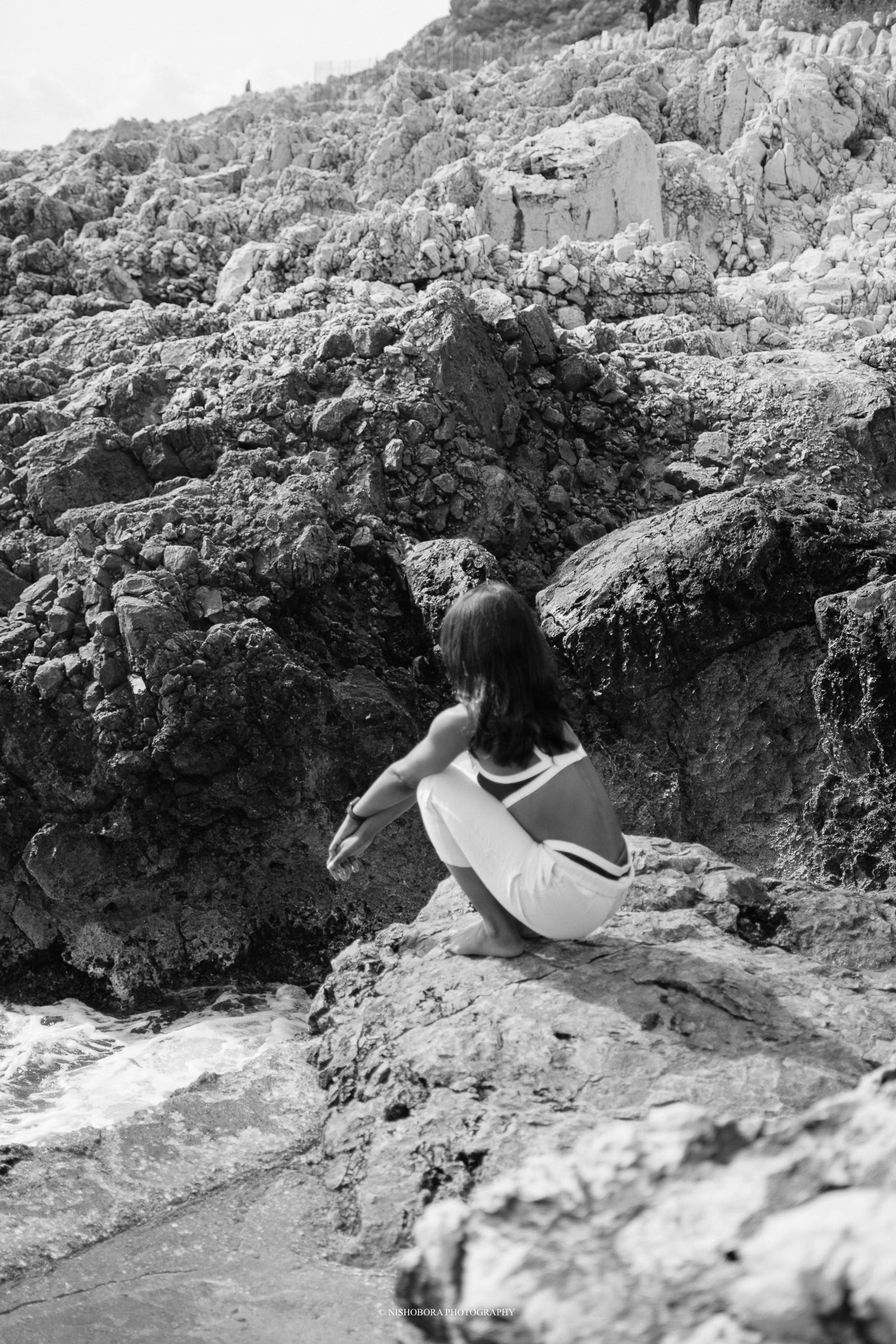
Contemplating in Cap Ferrat. My fiancé behind the lens, with my camera in his hands.
I’d love to hear how you relate to this. Have you ever confused boundaries with rejection? I am looking forward to hearing from you.

Yours,
M